
What High-Traffic Websites Have in Common Beyond SEO
Beyond SEO, high-traffic websites have content quality, branding, user experience, and audience engagement right. The click is just the beginning. What happens on your site after that click determines how your traffic grows.
And yet, not every site gets this right. We’ve worked with website owners who ranked on the first page but still struggled to increase website traffic. Strong search results meant nothing because visitors arrived, looked around, and left (yes, a slow site still counts against you).
This complete guide covers clear goals, content creation, branding, social media, and user experience. Each one addresses a different reason why visitors leave, and why they don’t come back.
What People Get Wrong About Website Traffic
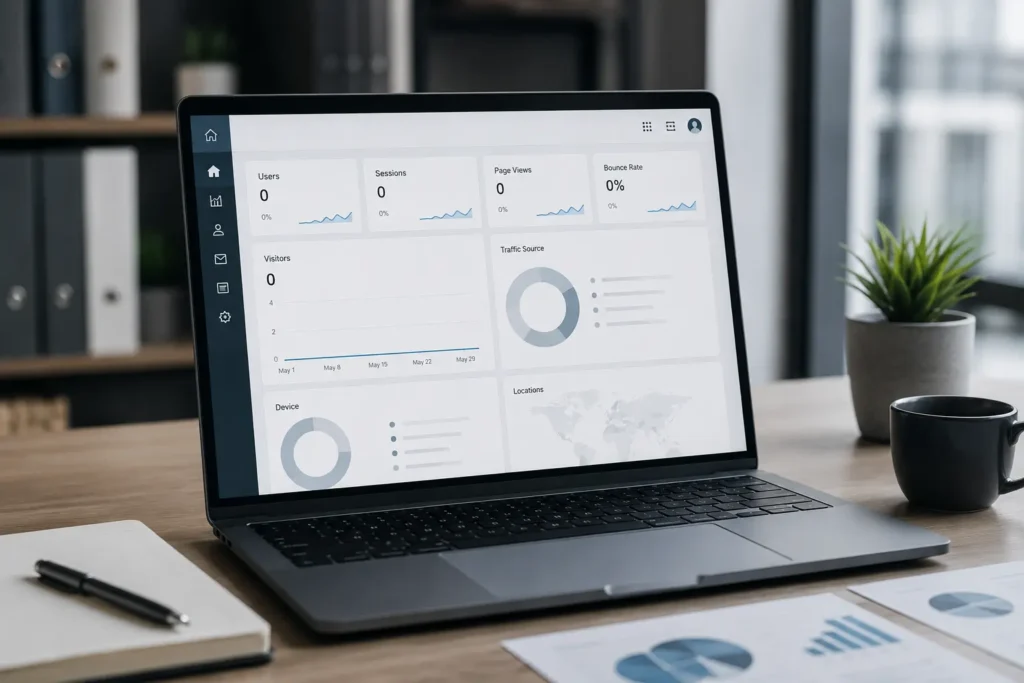
The reason your SEO isn’t enough to bring in website traffic is that rankings only get you in front of people. What happens after that click depends entirely on your content, branding, and how your site feels to use. Simply put, a website without a clear strategy is like a store with no sign outside. People walk right past it.
According to Nielsen Norman Group, you have roughly 10 seconds to communicate your value before most users decide to leave. That’s a content and experience gap, and high-traffic websites close it by treating SEO as the foundation everything else builds on.
From there, strong organic traffic comes from giving visitors a reason to stay, share, and return.
Clear Goals Give Website Growth a Direction
Our internal data across client campaigns shows that sites without documented goals publish three times more content that never ranks or converts. That’s a lot of wasted effort, and it all traces back to one missing ingredient: a clear direction.
To see how this plays out, it helps to look at both the page level and the campaign level separately.
Define What You Want Traffic to Do
Every page on your site has a job. A blog post drives search traffic, a landing page captures leads, and a product page moves visitors toward becoming customers. Without that clarity, your content marketing ends up pulling users in different directions with no clear next step.
On the visitor’s end, that lack of direction shows up as a gut feeling that something’s off.
Content Without Campaign Goals Goes Nowhere
Page-level clarity is only half the equation, and the other half is your campaign goals. A site focused on local results needs content built around location-specific search queries with clear geographic intent behind them. On the other hand, a site dedicated to lead generation needs pages that speak directly to a specific buyer at a specific stage.
Either way, every piece of content should trace back to a campaign goal that drives a real business result.
How High-Traffic Websites Use Content Creation to Drive Organic Traffic

High-traffic websites use content creation to drive organic traffic. They do it by building a library of pages that each target a specific search query. Every new piece of content is another entry point from Google into their site.
According to Google’s helpful content guidelines, pages visitors find helpful regularly outperform pages that chase keyword research alone.
Steady organic traffic traces back to keyword research, blog consistency, and new page creation.
- Keyword Research First: Keyword research tells you what your audience types into Google before a single word gets written. For example, a blog post targeting “best running shoes for flat feet” will outperform one carrying a vague title like “our top shoe picks”. That happens because it matches a real search query word for word.
- Blog Post Consistency: In general, sites that publish two to three blog posts per week accumulate search visibility at a rate that irregular publishers can’t match. Each post adds a new page to your site’s footprint in Google, and that footprint grows every time you hit publish.
- New Pages, New Opportunities: Every new page is also a chance to optimize image Alt text, and that’s an area most sites ignore completely. Each image on a new page can rank in Google image search and bring in a separate stream of organic traffic your competitors aren’t chasing.
Sites that run all three habits typically rank for more search queries and attract more backlinks. That accumulated organic traffic is something no ad budget can replicate.
How Branding Builds Trust and Brings Visitors Back

Branding brings visitors back by making your site feel like a place they already know. That feeling comes from a consistent voice, a recognizable look, and a promise that never shifts between pages. High-traffic websites build that recognition intentionally, and their audience grows because of it.
In fact, every return visit tells Google that your site delivered enough value to bring someone back. That signal carries real weight in search rankings (inconsistent branding silently destroys visitor confidence).
A brand that maintains the same presence every time also reduces your cost per acquisition. Your audience starts seeking your site out directly, and that direct traffic doesn’t fluctuate with algorithm updates the way search-dependent traffic does.
Why Social Media Is a Traffic Channel You Should Take Seriously
If your website traffic plateaued recently, your social media strategy is worth a second look. Based on our observations, pages that teams promote regularly on social platforms earned almost 40% more inbound links.
That growth traces back to four platforms specifically:
Platform | Content Type | Traffic Benefit |
Short-form videos | Direct site visits from bio and story links | |
Articles and posts | B2B audience reach and referral traffic | |
Images and infographics | Long-term referral traffic from evergreen pins | |
Mixed content | Community engagement and content shares |
What the table doesn’t show is the compounding effect of cross-platform sharing. A LinkedIn article shared on Facebook, saved to Pinterest, and repurposed into an Instagram post reaches four separate audiences.
User Experience and SEO Success Work Together
Google’s page experience signals confirm that page speed, navigation, and mobile usability directly affect search rankings. In practical terms, a slow load time or a confusing menu can cost your site positions in search results without touching a single keyword.
And frankly, a first-page ranking with weak content and poor UX is like a packed restaurant with terrible food. Visitors arrive, take one look, and leave (and yes, we’ve seen that SEO budget vanish overnight).
Among those three, page speed and navigation are where the most damage happens, so we’ll walk through both.
Your Page Speed Score Is Costing You Rankings
Every extra second your page takes to load increases the chances a visitor leaves before engaging with anything. Google tracks that behavior and factors it into how your pages rank in search results.
We’ve seen perfectly written pages lose rankings simply because nobody got around to fixing a four-second load time.
A Clear Site Structure Keeps Visitors Exploring Longer
Think about the last time you visited a site and couldn’t find what you were looking for. You probably left within seconds. Your visitors do the same thing, and Google notices.
Clear menus, logical page structures, and internal links that connect related content are all you need to keep people exploring your site longer.
High-Traffic Websites Don’t Leave Growth to Chance
Everything covered here connects back to one core idea. Consistent traffic comes from clear goals, quality content, recognizable branding, active social media, and an on-site experience that keeps visitors around. Websites that neglect even one of these areas tend to hit a ceiling they can’t explain.
Think of it as a chain: goals, content, branding, social media, and user experience. After working with dozens of client sites, we’ve found that removing any single one of those five areas can produce a measurable drop in traffic within months.
If the path forward still feels uncertain, Website Traffic Increaser Guy will audit your site, identify the weak points, and give you a clear plan to move forward. This way, growth doesn’t slow down for anyone.
Leave a Reply